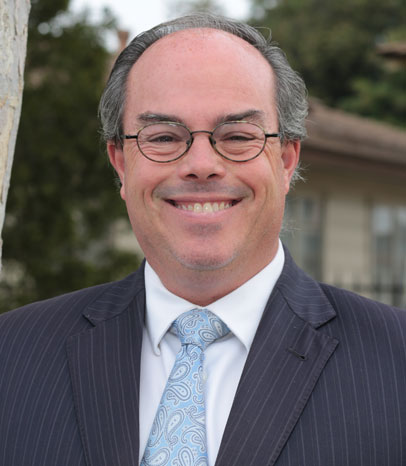
Gina Henry: The TCPA Plaintiff Whose Lawsuit Backfired, Chase Allowed to Collect Debt
Gina Marie Henry, a 65-year-old resident of Hayward, California, became the unlikely center of a landmark defense precedent in 2025 when her TCPA lawsuit against JP Morgan Chase Bank backfired spectacularly. Unlike the high-volume serial litigators profiled elsewhere (Dobronski, Callier, Salaiz, Gonzalez), Henry appears to be an ordinary consumer, one who sued over alleged prerecorded debt-collection calls, only to have the court allow Chase to countersue for her underlying credit card debt.
Henry is not a serial litigator. She is not a professional plaintiff. But her case has become one of the most important defense victories in recent TCPA history, establishing that when a consumer sues over illegal collection calls, the underlying debt becomes fair game for the bank to collect in the same lawsuit.
Legal commentators, defense firms, and consumer protection attorneys have closely followed Henry v. JP Morgan Chase because it fundamentally changes the risk calculus for consumers considering TCPA lawsuits against debt collectors. And for Henry personally, a woman living in an apartment with limited financial resources, the stakes could not be higher.
Who Is Gina Henry? A 65-Year-Old Hayward Resident Who Sued Chase
Gina Marie Henry is a Hayward, California resident associated with one major TCPA lawsuit against JP Morgan Chase Bank. Unlike the serial litigators profiled elsewhere who file dozens of lawsuits for profit, Henry appears to be an ordinary consumer who fell behind on credit card payments, received collection calls, and sued under the TCPA, only to have the bank turn the tables on her.
Personal Profile (From Public Records)
| Field | Details |
|---|---|
| Full Name | Gina Marie Henry |
| Aliases | Catherine Henry, Gina Henry, Henry Gina |
| Age | 65 (born November 1960) |
| Current Address | 820 Hancock St Apt 524, Hayward, CA 94544 |
| Primary Phones | 510-914-6842, 510-571-0825 (both mobile) |
| Primary Email | gthomashenry1012@yahoo.com |
| Occupation | Limited employment records (Espinozasepulve, Espinoza Lucia — no titles or dates) |
| Property Ownership | None found |
| Vehicles | None found |
What the Public Records Reveal
| Observation | Implication |
|---|---|
| Lives in an apartment (not a luxury home) | Limited financial resources |
| No owned properties | Renter, not homeowner |
| No vehicles on record | May not own a car |
| Limited employment history | Potentially retired or on fixed income |
| Age 65 | Elderly consumer, not sophisticated litigant |
| Aliases are minor variations | No evidence of identity concealment |
The Key Distinction from Serial Litigators
| Comparison | Gina Henry | Serial Litigators (Dobronski, Callier, Salaiz, Gonzalez) |
|---|---|---|
| Number of TCPA cases | 1 major case | 15-60+ cases |
| Filing pattern | Single lawsuit | High-volume, multi-jurisdictional |
| Legal training | None | Some are paralegals or attorneys |
| Aliases | Minor variations | Extensive (often 10+ aliases) |
| Property ownership | None | Multiple properties |
| Vehicles | None | Fleets of vehicles |
| Business model | Not applicable | Litigation-for-profit |
Henry appears to be an ordinary consumer, a 65-year-old woman living in a Hayward apartment, probably on a fixed income, who fell behind on credit card payments, received collection calls, and decided to sue. She is not a professional plaintiff. She is not running a litigation enterprise. She is, by all appearances, a senior citizen caught in a legal battle far larger than she likely anticipated.
Possible Relatives: A Multi-Generational Family Network
Public records identify 9 possible relatives of Gina Henry, suggesting deep roots in Northern California.
| Name | Age | Location | Notable |
|---|---|---|---|
| Donna Thomas | 101 | San Andreas, CA | Grandmother/mother |
| Mary Thomas | 115 | Oakland, CA | Grandmother/mother (centenarian) |
| Molly Henry | 31 | Hayward, CA | Daughter/relative |
| Catherine Henry | 33 | Fremont, CA | Daughter/relative |
| Tammy Chambers | 66 | Chesapeake, VA | Sister/relative |
| Debra Miles | 61 | Oakley, CA | Sister/relative |
| Duane Henry | 66 | Pittsburg, CA | Brother/relative |
| Roy Chambers | 79 | Chesapeake, VA | Brother-in-law/relative |
| Juan Gutierrez | 32 | San Jose, CA | Relative |
What This Reveals
Henry comes from a large, multi-generational family with deep roots in Northern California. The presence of 101-year-old and 115-year-old relatives suggests she may be a caregiver or has significant family responsibilities. This is not the profile of a professional litigant, it is the profile of an elderly woman with family ties.
Case Overview: Henry v. JP Morgan Chase Bank
The entire controversy began when Gina Henry filed a lawsuit in the Northern District of California against JP Morgan Chase Bank. She alleged that Chase violated the TCPA by placing repeated debt-collection calls to her phone using prerecorded or artificial voices without her prior consent.
Henry v. JP Morgan Chase Bank (2024-2026)
| Category | Details |
|---|---|
| Court | U.S. District Court – Northern District of California |
| Key Issue | Prerecorded debt-collection calls; TCPA violations |
| Outcome | Court allowed Chase’s counterclaim for underlying debt to proceed |
| Impact | Landmark defense precedent cited nationwide |
Henry’s Allegations
- Chase called her multiple times after she stopped paying her credit card bill
- The calls used prerecorded or artificial voices
- Chase did not obtain her prior consent for automated calls
- The calls violated TCPA restrictions on autodialers and prerecorded messages
The Debt Context
- The calls were about money Henry owed on her credit card
- Henry had defaulted on her credit card payments
- Chase was attempting to collect the outstanding balance
Chase’s Defense Strategy
- Chase did not simply deny liability
- Chase filed a counterclaim seeking repayment of the underlying credit card debt
- Chase argued that the debt and the calls were directly related
The 2025 Ruling on Counterclaims: A Landmark Decision
In January 2025, Judge Vince Chhabria made a decision that fundamentally changed TCPA litigation against debt collectors. This decision is now cited by defense attorneys nationwide.
The Motion to Dismiss
Henry asked the court to throw out Chase’s counterclaims.
| Argument | Henry’s Position |
|---|---|
| Lack of jurisdiction | The court did not have the power to decide about the credit card debt |
| Chilling effect | Allowing counterclaims would stop people from suing under the TCPA |
| Separate controversy | The debt and the calls were unrelated issues |
The Court’s Decision
The court said NO to Gina Henry.
| Finding | Court’s Ruling |
|---|---|
| Related controversies | The debt and the phone calls were connected because the calls were made to collect the debt |
| Judicial efficiency | It is better to deal with both things at the same time |
| No chilling effect | Chase could sue Henry in state court anyway |
The Judge’s Reasoning
“The calls were made to get Gina Henry to pay her debt. So the two things are related.”
“It is better to deal with both things at the same time.”
What This Means for Gina Henry: The Financial Trap
Henry now faces a stark financial reality.
| Scenario | Potential Outcome |
|---|---|
| Win TCPA case | Receive statutory damages ($500-$1,500 per call) |
| Lose counterclaim | Be ordered to pay back her credit card balance |
| Net result | Potentially owe more than she could recover |
The Math Problem for Henry
| Component | Potential Amount |
|---|---|
| Maximum TCPA recovery | $1,500 per call |
| Credit card debt balance | Likely thousands of dollars |
| Potential net loss | TCPA recovery minus debt balance = negative |
As legal analysts have noted, Henry now faces the possibility of winning a TCPA judgment while simultaneously being ordered to pay back a significantly larger credit card balance. For a 65-year-old woman living in an apartment with no vehicles and limited employment records, this could be financially devastating.
The Current Status (May 2026)
After the 2025 ruling, the case moved to the next phase.
1. Consent
- Did Gina Henry give Chase permission to call her with automated calls when she applied for her credit card?
- Credit card agreements often contain fine-print consent provisions
2. Debt Validity
- How much money does Gina Henry really owe?
- Did Chase follow the rules when collecting the debt?
3. Prerecorded Voice Evidence
- Henry’s filings focus heavily on artificial or prerecorded voices
- These claims are harder for banks to defeat under current FCC interpretations
Legal and Industry Impact: Why This Case Matters for 2026
1. Counterclaims as a Deterrent
This case shows that companies like JP Morgan Chase can turn the tables on people who sue them.
| Before Henry | After Henry |
|---|---|
| Consumers could sue debt collectors with minimal risk | Consumers now face counterclaim risk |
| TCPA claims seen as one-way street | Debt collectors have a defensive weapon |
| Plaintiffs had little to lose | Plaintiffs may owe more than they recover |
2. Shift in Litigation Focus
| Type of TCPA Case | Risk Level Post-Henry |
|---|---|
| Debt collection calls | High risk, counterclaims possible |
| Marketing robocalls | Lower risk |
| Lead generation calls | Lower risk |
Plaintiff-side lawyers increasingly focus on marketing robocalls rather than debt-collection calls because the Henry case changed the risk profile dramatically.
3. Judicial Efficiency Standard
The court preferred resolving all connected disputes in one lawsuit rather than forcing Chase to file a separate debt collection action.
Evidence of Artificial Voice: Henry’s 2026 Focus
In her later filings, Henry focused heavily on prerecorded and artificial voice allegations.
| Claim Type | Difficulty for Bank |
|---|---|
| ATDS claims | Harder after Facebook v. Duguid |
| Prerecorded voice claims | Easier to prove |
| Artificial voice claims | More difficult for banks to defeat |
Henry’s focus on artificial voice evidence is a tactical adjustment, but it may not overcome the debt counterclaim issue.
Summary Table of Legal Standing
| Feature | Details |
|---|---|
| Plaintiff | Gina Marie Henry |
| Defendant | JP Morgan Chase Bank |
| Court | U.S. District Court – Northern District of California |
| Judge | Vince Chhabria |
| Key Issue | Prerecorded debt-collection calls |
| Outcome | Court allowed Chase’s debt counterclaim |
| Key Ruling Date | January 2025 |
| Current Status | Active litigation |
| Legal Precedent | Banks may countersue within TCPA cases |
The Counterclaim Deterrent: How the Henry Case Changed TCPA Litigation
Before Henry
- Consumer sues bank for illegal collection calls
- Bank defends or settles
- No debt collection counterclaim in the TCPA case
After Henry
- Consumer sues bank for illegal collection calls
- Bank files counterclaim for debt
- Consumer potentially owes more than they recover
The Henry ruling makes debt-collection TCPA cases significantly riskier for consumers.
Public Reputation: A Cautionary Tale, Not a Serial Litigator
Unlike Mark Dobronski, Brandon Callier, Eric Salaiz, Yazmin Gonzalez, or Manuel Guadian, Gina Henry is not a serial litigator.
| Comparison | Gina Henry | Serial Litigators |
|---|---|---|
| Number of TCPA cases | 1 | 15-60+ |
| High-volume filing | No | Yes |
| Legal training | None | Some are paralegals/attorneys |
| Luxury assets | None | Often substantial |
| Age | 65 | Generally younger |
What Henry represents is a cautionary tale for ordinary consumers who sue debt collectors without anticipating the possibility of debt counterclaims.
Frequently Asked Questions
Is Gina Henry a serial litigator?
No. Public records indicate she filed one major TCPA lawsuit and does not fit the profile of a professional plaintiff.
What happened in Henry v. JP Morgan Chase?
Henry sued Chase alleging prerecorded debt-collection calls violated the TCPA. Chase countersued for the underlying credit card debt, and the court allowed the counterclaim to proceed.
Why was the ruling significant?
The ruling established that debt collectors may pursue underlying debt claims within the same TCPA lawsuit.
What is Henry’s financial risk?
She could potentially recover statutory damages while simultaneously owing a much larger debt judgment.
What do public records reveal about Henry?
She is a 65-year-old Hayward resident with no property, no vehicles, and limited employment records.
What is the current status of the case?
The litigation remains active, with disputes over consent, prerecorded voice evidence, and the debt amount.
What does the Henry case mean for other consumers?
Consumers considering TCPA lawsuits against debt collectors must now weigh the risk of counterclaims for the underlying debt.
Final Thoughts: The Elderly Consumer Whose Lawsuit Created Negative Precedent
Gina Marie Henry is not a serial litigator. She is not a professional plaintiff. She is a 65-year-old woman living in a Hayward apartment — no property, no vehicles, limited employment — who sued a bank over collection calls and found herself at the center of a precedent-setting TCPA decision.
Her case established that banks may countersue for underlying debt within TCPA litigation — a ruling now cited nationwide by defense attorneys and debt collectors. The result is a dramatic shift in how consumer-side lawyers evaluate debt-collection TCPA claims.
The irony is stark: Henry’s lawsuit, intended to stop unwanted collection calls, may ultimately result in her owing more money than she recovers.
As legal analysts have observed, the Henry case has already redirected TCPA litigation away from debt collection disputes and toward marketing robocalls, where there is no underlying debt exposure.
For consumers considering TCPA lawsuits in 2026, the message from Henry v. JP Morgan Chase is clear: suing over debt-collection calls may expose you to far greater financial risk than expected.
Sources & References
Primary Sources – Gina Henry (Litigation)
- https://tcpaworld.com/2025/01/15/chase-jp-morgan-chase-allowed-to-pursue-debt-against-tcpa-litigant-via-counterclaim/
- https://natlawreview.com/article/chase-jp-morgan-chase-allowed-pursue-debt-against-tcpa-litigant-counterclaim
- Henry v. JP Morgan Chase Bank, N.D. Cal. (January 2025 ruling by Judge Vince Chhabria)
Secondary Sources – Legal Commentary
- TCPAWorld; Coverage of debt counterclaims in TCPA litigation
- National Law Review; Analysis of Henry v. Chase
Public Records – BeenVerified Report
- Full Name: Gina Marie Henry
- Aliases: Catherine Henry, Gina Henry, Henry Gina
- Date of Birth: November 1960 (age 65)
- Current Address: 820 Hancock St Apt 524, Hayward, CA 94544
- Primary Phones: 510-914-6842, 510-571-0825
- Primary Email: gthomashenry1012@yahoo.com
- Employment: Limited records
- Properties: None found
- Vehicles: None found
- Relatives: 9 identified
Disclaimer
This article presents information based on publicly available court filings, legal commentary, media reporting, judicial rulings, and public records from BeenVerified. Unlike previous profiles in this series, Gina Henry is not characterized as a serial litigator or professional plaintiff, she appears to be an ordinary consumer whose lawsuit created unintended negative precedent. Public records data may not be fully accurate or current. This article is provided for informational and educational purposes only and does not constitute legal advice.